| |
2018
2018 Legislative Review 105th Legislature – Second session
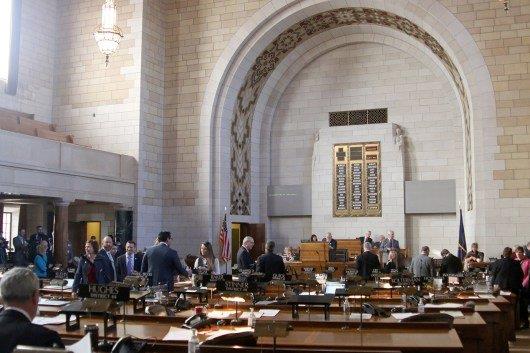
The second session of the 105th Nebraska Legislature adjourned April 18.
|
Passage of legislation significant to AIA NE: |
| LB299 |
Adopt the Occupational Board Reform Act and change procedures for rules and regulations. OPPOSE Governor Signed into Law (Amendments were adopted enabling AIA NE to Monitor) |
| LB379 |
Create the Willa Cather Historical Building Cash Fund and provide for a transfer of funds. SUPPORT Governor Signed into Law |
| LB775 |
Adopt the State Park System Construction Alternatives Act. Protects intellectual property and enables architects to be considered for design build projects. SUPPORT Governor Signed into Law |
| LB1000 |
Require a bond election under the Public Facilities Construction and Finance Act MONITOR Governor Signed into Law |
View entire legislation of interest from The 105th Nebraska Legislature >
AIA Nebraska Government Affairs Committee
Chair, Lowell Berg, AIA | The Clark Enersen Partners | Lincoln
James Brisnehan, AIA | CMBA Architects | Grand Island
Richard Burton, AIA | City of Lincoln | Lincoln
Dave Johnson, AIA | Studio 951 | Lincoln
Matthew Gulsvig, AIA | DLR Group | Omaha
Melinda Pearson, FAIA | Omaha
Greg Smith, AIA | Davis Design | Lincoln
Matt Stoffel, AIA | HDR | Omaha
|
|